So there are two basic elements that can make or break a story. One is cohesiveness, the other truthfulness. The former is established through the universe the story takes place in, the latter through the characters inhabiting it.
Let's address the universe part first. What you are creating is a parallel universe, even when your intention is to have the story take place in 'this' reality, like when you set out to do a historical fiction or a crime thriller. The reason is, the world you create will be grounded in your experience and yours alone, and that is a pretty restricted view. However, it's your goal to share this universe of yours and have others have a shot at making it their own. To achieve this, others have to believe in it, and to have them believe in it, it has got to add up – there must be no pinpricks, that's to say.
Now the characters. Their task is to be your audience's eyes and ears in the universe you created. It's through them that other people can experience your universe. To achieve this, your characters have got to be relatable, which is a subjective thing: one character might do the trick for A, but not for B. You can't control your audience's reaction, but what you can do is control the degree of realness they are based on: pick a person from the real world, observe him, drop him into your universe. If done right, it's the characters that will dictate the story's plot; you just channel them (at least that's how I imagine it would be). If the characters are real, then so will their actions and reactions, and the audience will perceive this as truthfulness. One contemporary writer who is a master at this is George Pelecanos.
Tuesday, 1 July 2014

Thursday, 19 June 2014
On building worlds and universes
I am not enthused about the upcoming Transformers flick. One of the reasons being is the world the franchise has tried to create on the widescreen just doesn't click. It isn't cohesive, which is key to building a world or a universe no matter how fantastical or weird. I'll give you a couple of examples of world-building projects that came across successfully as cohesive – one did so by design and the other by chance.
The first one – the by-design one – is Joseph Heller's Catch-22. It's a sin to use adjectives, if I've read Stephen King's On Writing: A Memoir of the Craft correctly, but Catch-22 fires them off like a machine gun to great effect because they all serve the greater cause of creating cohesiveness, of making the characters appear and act in a way that's consistent with the natural laws that govern the world of Catch-22. Nothing in the novel can escape from these laws, and the reader can therefore invest emotionally in this story with confidence. The story throws you down the rabbit hole and into the world of Catch-22, and while in Wonderland rest assured you won't find a Starbucks because if you do, that would be incongruous with that world's natural laws, it would be a pinprick that makes you go "huh?" and wake you up from your dream, from the illusion.
The second example is the Guns N' Roses song Paradise City. Now, stay with me here. The song is from the album Appetite for Destruction, a truthful if not gritty account on sex, drugs, and rock 'n' roll. Play the album and you can hear, see, and smell the streets of LA. It's a cohesive world that it's created and therefore safe for you to invest in emotionally. The song Paradise City, however, is our pinprick. But, like the album, it too is cohesive (and therefore a world within a world in the album's context). From the jangly guitar intro to the innocent lyrics, the whole thing operates according to its own natural laws and forms a cohesive world because… it rings true. The band was telling a truth. The song was conceived in the back of a van when the band, still unknown at the time, was traveling back home to LA from a brotherhood-forging road trip. They were feeling triumphant and out came this song.
Which tells me something else. One of the ingredients to creating a cohesive universe, no matter how outlandish, is truth. You have got to tell the truth, a truth or several truths. Star Wars is the perfect world-building success story. It's a universe that operates according to its own natural laws, and because it's so successful and popular people must have gotten some truths out of it, even if they were there by chance.
Anyway, to round this off, for something to be enjoyed on an artistic level it has got to be cohesive, meaning it has got to operate and abide by its own set of natural laws. Why? Because that's how we, humans, perceive and experience our existence in the here-and-now and if this is reflected in that something it tells us that it is being truthful. The currency of art is after all Truth.
The first one – the by-design one – is Joseph Heller's Catch-22. It's a sin to use adjectives, if I've read Stephen King's On Writing: A Memoir of the Craft correctly, but Catch-22 fires them off like a machine gun to great effect because they all serve the greater cause of creating cohesiveness, of making the characters appear and act in a way that's consistent with the natural laws that govern the world of Catch-22. Nothing in the novel can escape from these laws, and the reader can therefore invest emotionally in this story with confidence. The story throws you down the rabbit hole and into the world of Catch-22, and while in Wonderland rest assured you won't find a Starbucks because if you do, that would be incongruous with that world's natural laws, it would be a pinprick that makes you go "huh?" and wake you up from your dream, from the illusion.
The second example is the Guns N' Roses song Paradise City. Now, stay with me here. The song is from the album Appetite for Destruction, a truthful if not gritty account on sex, drugs, and rock 'n' roll. Play the album and you can hear, see, and smell the streets of LA. It's a cohesive world that it's created and therefore safe for you to invest in emotionally. The song Paradise City, however, is our pinprick. But, like the album, it too is cohesive (and therefore a world within a world in the album's context). From the jangly guitar intro to the innocent lyrics, the whole thing operates according to its own natural laws and forms a cohesive world because… it rings true. The band was telling a truth. The song was conceived in the back of a van when the band, still unknown at the time, was traveling back home to LA from a brotherhood-forging road trip. They were feeling triumphant and out came this song.
Which tells me something else. One of the ingredients to creating a cohesive universe, no matter how outlandish, is truth. You have got to tell the truth, a truth or several truths. Star Wars is the perfect world-building success story. It's a universe that operates according to its own natural laws, and because it's so successful and popular people must have gotten some truths out of it, even if they were there by chance.
Anyway, to round this off, for something to be enjoyed on an artistic level it has got to be cohesive, meaning it has got to operate and abide by its own set of natural laws. Why? Because that's how we, humans, perceive and experience our existence in the here-and-now and if this is reflected in that something it tells us that it is being truthful. The currency of art is after all Truth.
Tuesday, 9 April 2013
Review: Cloud Atlas
The movie is quite a lot to take in for me, but I noticed the word 'Truth' pops up multiple times, which I believe is the overarching theme. A theme that holds together the six stories that make up the movie and that, like the characters inhabiting them, are linked to one another by way of sub-themes.
Cloud Atlas is an adaptation from a namesake novel penned by David Mitchell, who had this to say about the novel, and I quote:
I think this movie is important.
SORQ score: 4
(Runtime: 172 minutes)
Cloud Atlas is an adaptation from a namesake novel penned by David Mitchell, who had this to say about the novel, and I quote:
"Literally all of the main characters, except one, are reincarnations of the same soul in different bodies..."All of the main characters in the movie are interesting if not moving and are of interest to the sub-themes, except for the ones played by Tom Hanks; I think his characters, his reincarnations, speak to the movie's overarching theme: Truth.
I think this movie is important.
SORQ score: 4
(Runtime: 172 minutes)
Saturday, 30 March 2013
Review: Oz the Great and Powerful
So on account of copyright issues, Disney was prevented from using specific stuff portrayed in the 1939 Oz movie. So this probably explains the creative changes made in the 2013 version.
So instead of The Scarecrow, The Cowardly Lion, and The Tin Man we have Glinda (Michelle Williams), Finley (Zach Braff), and the China Girl (Joey King). Instead of Dorothy, Oz (James Franco) takes the lead role. And instead of a treatise on theosophy, we get... Disney stuff.
I'm not even sure what Disney has stood and continues to stand for, but I don't trust it anymore. So instead of trying to decipher symbols relating to theosophy, I started to look for MK-ULTRA symbols and spotted a couple of one-eye salutes and a bunch of (monarch?) butterflies presaging the Black Swan metamorphosis that is to befall Theodora (Mila Kunis).
Bummer.
SORQ score: 4 (What can I say, it's right up my street after all.)
(Runtime: 130 minutes)
So instead of The Scarecrow, The Cowardly Lion, and The Tin Man we have Glinda (Michelle Williams), Finley (Zach Braff), and the China Girl (Joey King). Instead of Dorothy, Oz (James Franco) takes the lead role. And instead of a treatise on theosophy, we get... Disney stuff.
I'm not even sure what Disney has stood and continues to stand for, but I don't trust it anymore. So instead of trying to decipher symbols relating to theosophy, I started to look for MK-ULTRA symbols and spotted a couple of one-eye salutes and a bunch of (monarch?) butterflies presaging the Black Swan metamorphosis that is to befall Theodora (Mila Kunis).
Bummer.
SORQ score: 4 (What can I say, it's right up my street after all.)
(Runtime: 130 minutes)
Tuesday, 12 February 2013
Review: Prometheus
Had to see it on DVD because I missed it in theatres last year (something I regret). In a nutshell the movie has got great visuals and a good story.
The story could've been great too, though. Director Ridley Scott seemingly set out to expound, to some degree, the Book of Genesis in a literal fashion and, in the process, attempted to make sense of it by meshing it with the ancient astronauts theory. It gives the movie a religious overtone, a sentiment that's brought home even further by the feelings of crew members of the spaceship Prometheus toward the Christian faith of protagonist Elizabeth Shaw (Noomi Rapace).
Prometheus the movie could've been great if, like The Da Vinci Code the novel, it got people to think, if it rattled some cages if need be, but most importantly: if it got people to think – as opposed to leaving people with a frown on their faces.
It's still an interesting movie, though. Different crew members seem to represent different schools of thought, that is (based on my gut feeling): Meredith Vickers (Charlize Theron) represents atheism, Peter Weyland (Guy Pierce) mysticism, Charlie Holloway (Logan Marshall-Green) scepticism, David (Michael Fassbender) intellectualism, and Elizabeth Shaw faith (i.e. religion).
Spiritualism is not represented here, however. Which is too bad because it could've made the movie great.
SORQ score: 4
(Runtime: 124 minutes)
The story could've been great too, though. Director Ridley Scott seemingly set out to expound, to some degree, the Book of Genesis in a literal fashion and, in the process, attempted to make sense of it by meshing it with the ancient astronauts theory. It gives the movie a religious overtone, a sentiment that's brought home even further by the feelings of crew members of the spaceship Prometheus toward the Christian faith of protagonist Elizabeth Shaw (Noomi Rapace).
Prometheus the movie could've been great if, like The Da Vinci Code the novel, it got people to think, if it rattled some cages if need be, but most importantly: if it got people to think – as opposed to leaving people with a frown on their faces.
It's still an interesting movie, though. Different crew members seem to represent different schools of thought, that is (based on my gut feeling): Meredith Vickers (Charlize Theron) represents atheism, Peter Weyland (Guy Pierce) mysticism, Charlie Holloway (Logan Marshall-Green) scepticism, David (Michael Fassbender) intellectualism, and Elizabeth Shaw faith (i.e. religion).
Spiritualism is not represented here, however. Which is too bad because it could've made the movie great.
SORQ score: 4
(Runtime: 124 minutes)
Sunday, 30 December 2012
How to Access Superconsciousness
Just thought I'd share this.
PS: Thanks Axl for the music, the inspiration, and – following the show in Jakarta – the memories.
PS: Thanks Axl for the music, the inspiration, and – following the show in Jakarta – the memories.
Tuesday, 16 October 2012
Review: Warrior
Tommy Conlon (Tom Hardy), an ex-U.S. Marine, returns to his hometown of Pittsburgh where he asks his father, on-the-wagon alcoholic and former boxer Paddy Conlon (Nick Nolte), to train him for competition in a high-stakes MMA tournament. Meanwhile, Tommy's older brother, Brendan Conlon (Joel Edgerton), a high school physics teacher and a former UFC fighter, facing the prospect of foreclosure of his home, signs up for the same competition. Because of family history, Tommy harbours deep resentment towards Brendan. At the tournament, things come to a head.
This movie, which came out in 2011, is deep. There are three ways to go about taking it in: literally, metaphorically, and spiritually.
On a literal level, it's a sports drama; on a metaphorical level, it tells about a family facing and working out their demons. But on a spiritual level, it's about the human condition (the mind), it's about consciousness-fracture ("hell") transforming into unity-consciousness ("heaven").
Spiritually, Brendan represents our subconscious (the female aspect), Tommy represents our waking conscious and ego (the male aspect), and Paddy represents our conscious outlook or state of being (i.e. either earthly paradise or hellish nightmare).
Paddy is a barometer of our state of being, a reflection of how well or badly Brendan and Tommy are doing individually and in relation to each other. At the start of the movie, when Brendan and Tommy are separated (fractured), he is shown as anxious and is suffering (i.e. in a state of "hell"). At one point, following a particular emotional confrontation with Tommy, he even falls off the wagon.
During the tournament, both Brendan and Tommy defeat all their opponents, which represent our negative thoughts and emotions. Eventually, when Brendan has overcome Tommy in the tournament's final round and they leave the octagon literally as one with Brendan supporting an injured Tommy with his arm (symbolizing unity), Paddy cracks a crooked smile. He's finally at peace.
Tommy, Brendan, and Paddy are what are going on inside your head.
SORQ score: 4
(Runtime: 140 minutes)
This movie, which came out in 2011, is deep. There are three ways to go about taking it in: literally, metaphorically, and spiritually.
On a literal level, it's a sports drama; on a metaphorical level, it tells about a family facing and working out their demons. But on a spiritual level, it's about the human condition (the mind), it's about consciousness-fracture ("hell") transforming into unity-consciousness ("heaven").
Spiritually, Brendan represents our subconscious (the female aspect), Tommy represents our waking conscious and ego (the male aspect), and Paddy represents our conscious outlook or state of being (i.e. either earthly paradise or hellish nightmare).
Paddy is a barometer of our state of being, a reflection of how well or badly Brendan and Tommy are doing individually and in relation to each other. At the start of the movie, when Brendan and Tommy are separated (fractured), he is shown as anxious and is suffering (i.e. in a state of "hell"). At one point, following a particular emotional confrontation with Tommy, he even falls off the wagon.
During the tournament, both Brendan and Tommy defeat all their opponents, which represent our negative thoughts and emotions. Eventually, when Brendan has overcome Tommy in the tournament's final round and they leave the octagon literally as one with Brendan supporting an injured Tommy with his arm (symbolizing unity), Paddy cracks a crooked smile. He's finally at peace.
Tommy, Brendan, and Paddy are what are going on inside your head.
SORQ score: 4
(Runtime: 140 minutes)
Thursday, 13 September 2012
The ultimate spaghetti sauce recipe
You may think this to be unimportant or trivial, but it isn't. Not to me anyways. I have found and tried out the ultimate spaghetti sauce recipe, off the cooking show of Buddy Valastro aka the Cake Boss, which makes it as authentic Italian as it gets.
Yield: 3-4
Ingredients
a splash of good quality olive oil
a couple of cloves of garlic (more is perfectly okay)
1 can of peeled tomatoes
a handful of fresh basil leaves
salt and pepper
about a teaspoon of sugar
Directions
Finely chop the garlic and heat a sauté pan with the olive oil. Add the garlic. When it's starting to smell good, add the tomatoes and half or 2/3 of the basil. Season and add the sugar. Cooks for about twice the time you need to cook your pasta. Add pasta and the remaining basil to the sauce and toss until everything is coated with the sauce. Done.
Yield: 3-4
Ingredients
a splash of good quality olive oil
a couple of cloves of garlic (more is perfectly okay)
1 can of peeled tomatoes
a handful of fresh basil leaves
salt and pepper
about a teaspoon of sugar
Directions
Finely chop the garlic and heat a sauté pan with the olive oil. Add the garlic. When it's starting to smell good, add the tomatoes and half or 2/3 of the basil. Season and add the sugar. Cooks for about twice the time you need to cook your pasta. Add pasta and the remaining basil to the sauce and toss until everything is coated with the sauce. Done.
Tuesday, 24 July 2012
Review: The Dark Knight Rises
It has been eight years since the Joker (Heath Ledger) took Gotham City by storm and Bruce Wayne/ the Batman (Christian Bale) has yet to come to terms with the aftermath. Wrapping up Christopher Nolan's Batman saga, Rises continues from and tops The Dark Knight (2008).
Wayne has become a recluse and languishes inside his rebuilt mansion, which is a personification of himself: imposing on the outside, empty on the inside. His deliverance, however, arrives in the form of Selina (Anne Hathaway), a jewellery thief, even as his doom, Bane (Tom Hardy), is making camp in Gotham's bowels.
In the movie, Bane claims to wanting to return the power to the people, even when he is planning for carnage. Online sources have pointed out that he – part supervillain, part superhooligan, on the whole intimidating as fu*k – was in fact scripted to demonize potential leaders of the 99 percent, the common people. The reasoning behind this is that the story for Rises was co-written by David S. Goyer, who happens to have collaborated on the upcoming Call of Duty: Black Ops II game which has the leader of the 99 percent as its main villain. I wouldn't have called it myself, but I second.
"We are the 99%" is the slogan that's been made popular by the Occupy movement, i.e. the international protest against social and economic inequality which started in May 2011 in Spain and took inspiration from the Arab Spring that began in December 2010. So, who are the 1 percent? To answer that we need to go down the rabbit hole.
The 1 percent, the ruling class, seek to dominate society by targeting finances, law, government, education, and media. They own, for example, Time Warner, one of the world's largest media and entertainment conglomerate (the studio behind Rises, Warner Bros., is a subsidiary). They're part of secret societies bent on world domination, creating a New World Order, the Fourth Reich. They're Luciferians, occultists. They are the Order of Illuminati, though I believe that is only one name they go by and that it's only a part of a larger structure. They can be thwarted if the 99 percent rises up.
This takes the movie into the world of reality. Because what's happening here is part of an insidious effort to plant specific ideas in the mind of the viewer: proponents of uprisings are terrorists, heavy police force presence is good and normal. The Colorado shooting: did it take place to grease the wheels for gun control in the US and undermine the 99 percent? Was the shooter subject to ritual abuse/ mind control?
On to the Quadrant.
(Runtime: 164 minutes)
Wayne has become a recluse and languishes inside his rebuilt mansion, which is a personification of himself: imposing on the outside, empty on the inside. His deliverance, however, arrives in the form of Selina (Anne Hathaway), a jewellery thief, even as his doom, Bane (Tom Hardy), is making camp in Gotham's bowels.
In the movie, Bane claims to wanting to return the power to the people, even when he is planning for carnage. Online sources have pointed out that he – part supervillain, part superhooligan, on the whole intimidating as fu*k – was in fact scripted to demonize potential leaders of the 99 percent, the common people. The reasoning behind this is that the story for Rises was co-written by David S. Goyer, who happens to have collaborated on the upcoming Call of Duty: Black Ops II game which has the leader of the 99 percent as its main villain. I wouldn't have called it myself, but I second.
"We are the 99%" is the slogan that's been made popular by the Occupy movement, i.e. the international protest against social and economic inequality which started in May 2011 in Spain and took inspiration from the Arab Spring that began in December 2010. So, who are the 1 percent? To answer that we need to go down the rabbit hole.
The 1 percent, the ruling class, seek to dominate society by targeting finances, law, government, education, and media. They own, for example, Time Warner, one of the world's largest media and entertainment conglomerate (the studio behind Rises, Warner Bros., is a subsidiary). They're part of secret societies bent on world domination, creating a New World Order, the Fourth Reich. They're Luciferians, occultists. They are the Order of Illuminati, though I believe that is only one name they go by and that it's only a part of a larger structure. They can be thwarted if the 99 percent rises up.
This takes the movie into the world of reality. Because what's happening here is part of an insidious effort to plant specific ideas in the mind of the viewer: proponents of uprisings are terrorists, heavy police force presence is good and normal. The Colorado shooting: did it take place to grease the wheels for gun control in the US and undermine the 99 percent? Was the shooter subject to ritual abuse/ mind control?
On to the Quadrant.
- [subjective] Story: The Colorado shooting overshadowed the excitement surrounding the movie, but not for long. Rises delivers, sent my pulse racing at times, and despite the hidden message(s), despite its grimness, it came over as a positive experience. (rating = 1)
- [subjective] Characters: The Batman has been turned into something where widescreen adaptations of Superman have failed: a savior. The tone of the movie is such that while watching I expected the Batman to make the ultimate sacrifice. (rating = 1)
- [objective] Characters: Characters have been fleshed out into persons. Bane is intimidating in a very real way. (rating = 1)
- [objective] Story: Again, the tone of the movie is such that I expected Nolan to defy convention and allow Gotham to burn. It would somehow fit our times. (rating = 1)
(Runtime: 164 minutes)
Tuesday, 3 July 2012
Left Hanging
An album by Big B I'm into at the moment.
1. Continental Drift
2. Game Theory
3. Archetype
4. Terra Firma
5. Cosmogony
6. What the Hell Was That?
7. Box Beat Boom
Credits:
Travis Dickerson – Keyboards
Buckethead – Guitar and Bass
Brain – Drums
Ramy Antoun – Drums
Pinchface – Drums
1. Continental Drift
2. Game Theory
3. Archetype
4. Terra Firma
5. Cosmogony
6. What the Hell Was That?
7. Box Beat Boom
Credits:
Travis Dickerson – Keyboards
Buckethead – Guitar and Bass

Brain – Drums
Ramy Antoun – Drums
Pinchface – Drums
Monday, 11 June 2012
Talkin' 'bout politics and stuff
I went exclusively to state schools during high school because they were affordable. They would've had done the trick just fine too if it weren't for this small gripe: they exclusively taught me what to think, never how to think.
As a result, when I graduated and was on my way to college I basically still had the same world view as before I entered the schooling system, which can perhaps be described as naive bewilderment as to the workings of the world.
What drives the economy? What is the economy? How do people run these big multinational companies? Why do the ads I see in magazines look the way they do? Newspapers have political leanings? Left is hip, right is not? What makes the world tick?
I was left to my own means to figuring out the world. The stuff I learned at school was of little use and to be forgotten as soon as the exam period was over. The emphasis was after all on memorizing, never on analyzing and understanding.
Take for example politics. Politics is a sphere that permeates the very fabric of society, yet its mechanics were never instructed on in the classroom and as a result it remained as this fuzzy and complicated subject. It need not be. Not, for instance, if teachers taught their classrooms this:
Left being progressive and right being conservative are misconceptions. What they actually mean is that the further left you go on the political spectrum, the more power the government will have (100 percent power [total government] on the far left), and vice versa if you reverse direction (zero power [no government] on the far right).
Best to stay in the middle, where the government is limited to its proper role of protecting the rights of the people as mandated by the constitution. Supporters of this are called constitutional moderates. Pay attention if come election time a candidate promises to uphold the constitution (i.e. to protect the rights of the people): you may have a winner.
Furthermore, there are five forms of government: (i) monarchy, (ii) oligarchy, (iii) democracy, (iv) republic, and (v) anarchy. In today's world, however, there are only two forms of government: oligarchy and republic. When you hear somebody say monarchy or dictatorship, what he actually means to say is oligarchy. Oligarchy means ruled by a few and is the most common form of government in history and in today's world: not one country is ruled by a single person, as a monarchy or dictatorship suggests; there's always a group of people behind that one leader who pull the strings.
If there are only oligarchies and republics, this means that there are no democracies either. The reason being is that a democracy is not a stable government: it's the gradual transition from limited government to the unlimited rule of an oligarchy. The flaw of a democracy is that the majority isn't restrained; in a democracy, if half the people can be persuaded to want something, they rule.
The most desired form of government is a republic. A true republic is one where the government is limited by law, leaving the people alone. This equates to freedom, as the essence of freedom is the proper limitation of government. This also means that law is everything in a republic.
Then there is an anarchy. Like a democracy, an anarchy is not a stable form of government. It's a quick transition from something that exists to something desired by the power hungry.
Those advocating an anarchy don't like the government that they have. They turn to anarchy to bring about revolutionary change. During the chaos, the people turn to those who are best able to put an end to it and beg them to restore order, and, tragically, those who are best able to end the chaos are those who started it.
Schools should prepare you for the real world and equip you with a working knowledge of how the world works. They should instruct you how to think for yourself and to question everything. Call the course Real World Workings 101, if you like. Doing otherwise would be both a waste and a crime.
As a result, when I graduated and was on my way to college I basically still had the same world view as before I entered the schooling system, which can perhaps be described as naive bewilderment as to the workings of the world.
What drives the economy? What is the economy? How do people run these big multinational companies? Why do the ads I see in magazines look the way they do? Newspapers have political leanings? Left is hip, right is not? What makes the world tick?
I was left to my own means to figuring out the world. The stuff I learned at school was of little use and to be forgotten as soon as the exam period was over. The emphasis was after all on memorizing, never on analyzing and understanding.
Take for example politics. Politics is a sphere that permeates the very fabric of society, yet its mechanics were never instructed on in the classroom and as a result it remained as this fuzzy and complicated subject. It need not be. Not, for instance, if teachers taught their classrooms this:
Left being progressive and right being conservative are misconceptions. What they actually mean is that the further left you go on the political spectrum, the more power the government will have (100 percent power [total government] on the far left), and vice versa if you reverse direction (zero power [no government] on the far right).
Best to stay in the middle, where the government is limited to its proper role of protecting the rights of the people as mandated by the constitution. Supporters of this are called constitutional moderates. Pay attention if come election time a candidate promises to uphold the constitution (i.e. to protect the rights of the people): you may have a winner.
Furthermore, there are five forms of government: (i) monarchy, (ii) oligarchy, (iii) democracy, (iv) republic, and (v) anarchy. In today's world, however, there are only two forms of government: oligarchy and republic. When you hear somebody say monarchy or dictatorship, what he actually means to say is oligarchy. Oligarchy means ruled by a few and is the most common form of government in history and in today's world: not one country is ruled by a single person, as a monarchy or dictatorship suggests; there's always a group of people behind that one leader who pull the strings.
If there are only oligarchies and republics, this means that there are no democracies either. The reason being is that a democracy is not a stable government: it's the gradual transition from limited government to the unlimited rule of an oligarchy. The flaw of a democracy is that the majority isn't restrained; in a democracy, if half the people can be persuaded to want something, they rule.
The most desired form of government is a republic. A true republic is one where the government is limited by law, leaving the people alone. This equates to freedom, as the essence of freedom is the proper limitation of government. This also means that law is everything in a republic.
Then there is an anarchy. Like a democracy, an anarchy is not a stable form of government. It's a quick transition from something that exists to something desired by the power hungry.
Those advocating an anarchy don't like the government that they have. They turn to anarchy to bring about revolutionary change. During the chaos, the people turn to those who are best able to put an end to it and beg them to restore order, and, tragically, those who are best able to end the chaos are those who started it.
Schools should prepare you for the real world and equip you with a working knowledge of how the world works. They should instruct you how to think for yourself and to question everything. Call the course Real World Workings 101, if you like. Doing otherwise would be both a waste and a crime.
Friday, 1 June 2012
Marco van Basten best of
I just thought that the time is right to finally place Marco van Basten's two best goals on a single page.
The first one, and his all-time best, is the bicycle kick goal he made in 1986 as an Ajax player against FC Den Bosch. As a kid I watched the goal live on television and was blown away. Other kids were too because at soccer training in the week after everybody was just begging our trainers to teach us how to do the bicycle kick. The trainers just laughed it off and grumbled something in the vein of, no, they won't teach us how to do the bicycle kick, that's not what you and I are here for, that's just something you have to figure out for yourself. In my mind, the response only made Marco van Basten even more awesome and even more of an enigma.
The second goal is the volley against the USSR that won the Dutch its first and so far its only European Championship title. That was in 1988 and I missed the entire event as I'd just moved to a new country and was trying to adjust and settle. As such, its impact and importance was lost on me. To me, the assist is equally as impressive as the volley itself, actually.
The first one, and his all-time best, is the bicycle kick goal he made in 1986 as an Ajax player against FC Den Bosch. As a kid I watched the goal live on television and was blown away. Other kids were too because at soccer training in the week after everybody was just begging our trainers to teach us how to do the bicycle kick. The trainers just laughed it off and grumbled something in the vein of, no, they won't teach us how to do the bicycle kick, that's not what you and I are here for, that's just something you have to figure out for yourself. In my mind, the response only made Marco van Basten even more awesome and even more of an enigma.
The second goal is the volley against the USSR that won the Dutch its first and so far its only European Championship title. That was in 1988 and I missed the entire event as I'd just moved to a new country and was trying to adjust and settle. As such, its impact and importance was lost on me. To me, the assist is equally as impressive as the volley itself, actually.
Tuesday, 29 May 2012
SORQ notes to self
- The extent to which a character has been fleshed out into a person may or may not be the key deciding factor for people to liking a movie (or a TV series or a book).
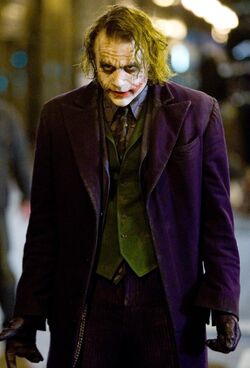
- Memorable fictional villains are almost always: really cool on the outside, really not cool on the inside. E.g. Darth Vader, Don Corleone, Hannibal Lecter, Vincent Vega & Jules Winnfield, Heath Ledger's Joker.


Saturday, 26 May 2012
Soccer: the SORQ treatment
I played soccer as a kid. I even was a member of the local soccer club. And when I wasn't playing for my club, I would be playing on the patch of grass behind my home.
Marco van Basten was playing for Ajax Amsterdam at the time and I venerated him. After all, the man was a striker, that special kind of player who gets to be placed way up there on the front line, the one who is brave enough and who has it together enough to take on the last defence of the enemy and to try and take us that much closer to victory.
With my club I would play either in the back or in the midfield and when our striker would have the ball, I would watch him from afar with bated breath, and when he scored I would have nothing but admiration for the guy. How the hell does he do it, keeping his cool like he does in the enemy's lair?
On to the Quadrant.
1. [subjective] The game: It's symbolic war. Two villages, nations, squads square up against each other, and when the drumbeat of war falls silent, only one thing is left to do. (rating = 1)
2. [subjective] The team: The battle-scarred veterans, the celebrated heroes, the unsung heroes, the generals, the foot soldiers. Which one are you? (rating = 1)
3. [objective] The team: To win is to have the right man at the right place in the right formation. In 90 minutes' time you will know if you indeed were right. (rating = 1)
4. [objective] The game: It's a game of chess, and chess is forever. Mental, emotional, physical: it is the beautiful game. (rating = 1)
SORQ score: 4
PS: I've decided to name my pet teak tree Party Tree II.
Marco van Basten was playing for Ajax Amsterdam at the time and I venerated him. After all, the man was a striker, that special kind of player who gets to be placed way up there on the front line, the one who is brave enough and who has it together enough to take on the last defence of the enemy and to try and take us that much closer to victory.
With my club I would play either in the back or in the midfield and when our striker would have the ball, I would watch him from afar with bated breath, and when he scored I would have nothing but admiration for the guy. How the hell does he do it, keeping his cool like he does in the enemy's lair?
On to the Quadrant.
1. [subjective] The game: It's symbolic war. Two villages, nations, squads square up against each other, and when the drumbeat of war falls silent, only one thing is left to do. (rating = 1)
2. [subjective] The team: The battle-scarred veterans, the celebrated heroes, the unsung heroes, the generals, the foot soldiers. Which one are you? (rating = 1)
3. [objective] The team: To win is to have the right man at the right place in the right formation. In 90 minutes' time you will know if you indeed were right. (rating = 1)
4. [objective] The game: It's a game of chess, and chess is forever. Mental, emotional, physical: it is the beautiful game. (rating = 1)
SORQ score: 4
PS: I've decided to name my pet teak tree Party Tree II.
Friday, 18 May 2012
Review: 'The Avengers'
In The Avengers, blockbuster special effects meet cracker-barrel Saturday morning cartoon storytelling as an energy cube of sorts becomes the object of contention between a supervillain and a group of superheroes called the Avengers.
On to the Quadrant.
1. Story, subjective: When I watched the movie, I wasn't actually thinking of it as a Saturday morning cartoon, but rather as a comic book adaptation. The movie assumes the viewer has some degree of familiarity with the Marvel universe, which, since I haven't, I find a bit alienating. (rating = 0)
2. Characters, subjective: You relate to a superhero when the human being that's the flip side to his alter ego is fleshed out into a person. It's hard to relate to comic book superheroes or mythological gods. (rating = 0)
3. Characters, objective: Weaksauce supervillain. Weaksauce chemistry among the good guys. It's not the costly special effects that people will remember, but the priceless chemistry. Having said that, the characters individually are fun to watch. (rating = 0.5)
4. Story, objective: The story doesn't seem to have an anchoring theme, a 'ground' as in a connection to the earth, to make the movie relatable. I find it a bit puzzling actually as to why the story doesn't seem to have an anchoring theme: after all, it's simply common sense to have one when telling a story. (rating = 0)
SORQ score: 0.5
(Runtime: 143 minutes)
On to the Quadrant.
1. Story, subjective: When I watched the movie, I wasn't actually thinking of it as a Saturday morning cartoon, but rather as a comic book adaptation. The movie assumes the viewer has some degree of familiarity with the Marvel universe, which, since I haven't, I find a bit alienating. (rating = 0)
2. Characters, subjective: You relate to a superhero when the human being that's the flip side to his alter ego is fleshed out into a person. It's hard to relate to comic book superheroes or mythological gods. (rating = 0)
3. Characters, objective: Weaksauce supervillain. Weaksauce chemistry among the good guys. It's not the costly special effects that people will remember, but the priceless chemistry. Having said that, the characters individually are fun to watch. (rating = 0.5)
4. Story, objective: The story doesn't seem to have an anchoring theme, a 'ground' as in a connection to the earth, to make the movie relatable. I find it a bit puzzling actually as to why the story doesn't seem to have an anchoring theme: after all, it's simply common sense to have one when telling a story. (rating = 0)
SORQ score: 0.5
(Runtime: 143 minutes)
Sunday, 13 May 2012
Subjective-Objective Relatability Quadrant: the Roll-out
The Subjective-Objective Relatability Quadrant or SORQ or simply the Quadrant is a tool that has been designed to assess the extent to which something imitates life. This something can be anything, but will here be primarily used for movies, books, and music. Also, it's made up.
Now, imagine a grid divided horizontally into two sections. The upper part denotes the Subjective section, the lower part the Objective section. Both are then further divided vertically into two subsections each, i.e. Story and Characters.
So, moving clockwise from the upper left corner of the quadrant, we now have:
1) Section Subjective, subsection Story, which asks whether the story of a movie (for example) relates on a personal level (if yes rate = 1, if no = 0, if neutral = 0.5);
2) Section Subjective, subsection Characters, which asks whether the characters of a movie relate on a personal level (yes = 1, no = 0, neutral = 0.5);
3) Section Objective, subsection Characters, which asks whether the characters of a movie are 'real' (yes = 1, no = 0, neutral = 0.5); and
4) Section Objective, subsection Story, which asks whether the story of a movie is 'real' (yes = 1, no = 0, neutral = 0.5).
The highest achievable score is 4, the lowest nought.
SORQ is based on the assumption that the degree to which someone likes a movie (or a book or a band) correlates directly with the extent it relates to that person and/or the real world. The personal experience is subjective and may therefore vary among individuals, whereas the realness factor can be perceived objectively and is rather conformable.
This is the roll-out of SORQ and tweaks and modifications will be made along the way.
Now, imagine a grid divided horizontally into two sections. The upper part denotes the Subjective section, the lower part the Objective section. Both are then further divided vertically into two subsections each, i.e. Story and Characters.
So, moving clockwise from the upper left corner of the quadrant, we now have:
1) Section Subjective, subsection Story, which asks whether the story of a movie (for example) relates on a personal level (if yes rate = 1, if no = 0, if neutral = 0.5);
2) Section Subjective, subsection Characters, which asks whether the characters of a movie relate on a personal level (yes = 1, no = 0, neutral = 0.5);
3) Section Objective, subsection Characters, which asks whether the characters of a movie are 'real' (yes = 1, no = 0, neutral = 0.5); and
4) Section Objective, subsection Story, which asks whether the story of a movie is 'real' (yes = 1, no = 0, neutral = 0.5).
The highest achievable score is 4, the lowest nought.
SORQ is based on the assumption that the degree to which someone likes a movie (or a book or a band) correlates directly with the extent it relates to that person and/or the real world. The personal experience is subjective and may therefore vary among individuals, whereas the realness factor can be perceived objectively and is rather conformable.
This is the roll-out of SORQ and tweaks and modifications will be made along the way.
Thursday, 26 April 2012
Captain EO's Voyage
An album by Buckethead which, thanks to today's music industry, you may have never heard of.
Captain EO is of course none other than yours truly, boldly going where no man has gone before in my trusty spaceship which may or may not resemble the Millennium Falcon.
Here then, I give you, and I do urge you to enjoy, Captain EO's Voyage:
1. Captain EO's Voyage
2. Light
3. Infinity Appears
4. Stained Glass Hill
5. Trails of Moondust
6. Star Chasing
7. Dancing the Dream
8. The Siphoning Sequence
9. Chase the Darkness Out
10. Backwards Footprint
11. Tarantula Crossing
12. Tears in the Mirror
Credits:
Buckethead – Guitars
Dan Monti – Co-writer, producer, mixing, bass, drums
PS: If I need a pick-me-up or just a laugh in general, this clip normally does the job.
PPS: I've yet to come up with a name for my pet teak tree.
Captain EO is of course none other than yours truly, boldly going where no man has gone before in my trusty spaceship which may or may not resemble the Millennium Falcon.

Here then, I give you, and I do urge you to enjoy, Captain EO's Voyage:
1. Captain EO's Voyage
2. Light
3. Infinity Appears
4. Stained Glass Hill
5. Trails of Moondust
6. Star Chasing
7. Dancing the Dream
8. The Siphoning Sequence
9. Chase the Darkness Out
10. Backwards Footprint
11. Tarantula Crossing
12. Tears in the Mirror
Credits:
Buckethead – Guitars
Dan Monti – Co-writer, producer, mixing, bass, drums
PS: If I need a pick-me-up or just a laugh in general, this clip normally does the job.
PPS: I've yet to come up with a name for my pet teak tree.
Friday, 13 April 2012
Guns N' Roses Best of Volume I
Guns N' Roses is going to be inducted into the Rock and Roll Hall of Fame tomorrow. Very cool and it feels like closure of sorts. So, in reflection of that sentiment I'm going to do a list of the band's best songs off the albums they made between 1987 and 1993.
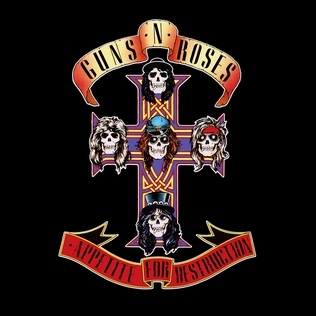
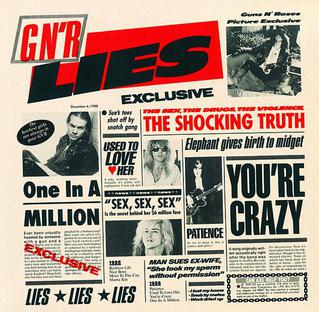
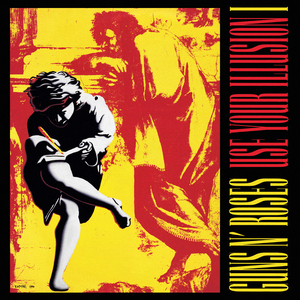
There are five of them: Appetite for Destruction (1987), G N' R Lies (1988), Use Your Illusion I (1991), Use Your Illusion II (1991), and "The Spaghetti Incident?" (1993).
Each is a masterpiece as they are cases of art imitating life – your life. So here goes:
Guns N' Roses Best of Volume I
1. Welcome to the Jungle
You're in Kansas no more, honey.
2. Nightrain
It's about a graffiti-clad commuter train plying an urban night sky.
3. Think About You
This is Izzy, not filler.
4. Reckless Life
I'm where? Senior high?
5. Move to the City
Going to senior high is supposed to feel like doing time.
6. One in a Million
Because singing about it is cheaper than seeing a shrink.
7. November Rain
No more cowbells? Ever?
8. Dead Horse
For no clear reason, a personal favourite of mine second only to Nightrain.
9. Coma
They went from Appetite to this, how?
10. Yesterdays
Because Yesterday (singular) has been taken.
11. Locomotive
It's a dinner and a show when the outro plays.
12. Estranged
The purpose of the oil tanker is to offset the guitar.
13. Don't Cry (Alternate lyrics)
Cooler vibes win out against the original version.
Bonus track:
14. Ain't It Fun (feat. Michael Monroe)
Something I asked myself a lot as I headed for the home stretch at senior high.

There are five of them: Appetite for Destruction (1987), G N' R Lies (1988), Use Your Illusion I (1991), Use Your Illusion II (1991), and "The Spaghetti Incident?" (1993).
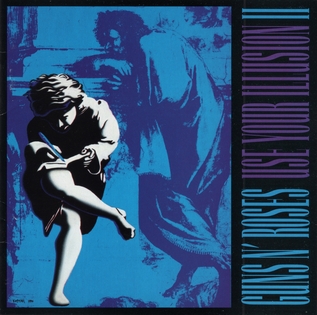

Each is a masterpiece as they are cases of art imitating life – your life. So here goes:
Guns N' Roses Best of Volume I
1. Welcome to the Jungle
You're in Kansas no more, honey.
2. Nightrain
It's about a graffiti-clad commuter train plying an urban night sky.
3. Think About You
This is Izzy, not filler.
4. Reckless Life
I'm where? Senior high?
5. Move to the City
Going to senior high is supposed to feel like doing time.
6. One in a Million
Because singing about it is cheaper than seeing a shrink.
7. November Rain
No more cowbells? Ever?
8. Dead Horse
For no clear reason, a personal favourite of mine second only to Nightrain.
9. Coma
They went from Appetite to this, how?
10. Yesterdays
Because Yesterday (singular) has been taken.
11. Locomotive
It's a dinner and a show when the outro plays.
12. Estranged
The purpose of the oil tanker is to offset the guitar.
13. Don't Cry (Alternate lyrics)
Cooler vibes win out against the original version.
Bonus track:
14. Ain't It Fun (feat. Michael Monroe)
Something I asked myself a lot as I headed for the home stretch at senior high.
Sunday, 1 April 2012
Emerald City
Get a load of this crock. Dr. S. James Gates, Jr., a theoretical physicist at the University of Maryland, thinks we're actually living in a Matrix-like world.
You see, while doing research on something called supersymmetry, Gates discovered "the presence of codes in the equations of physics", much in the way you would run into DNA when studying an animal.
Don't believe him? I know, I don't even know what supersymmetry is, but if the following isn't proof of some sort, I just don't know what is:
Axl Rose, Buckethead, and Daft Punk are in talks to join forces in a pwoject tentatively titled Emerald City. As a point in fact, they've set their sights on becoming the wold's most weclusive band.
Gene Simmons of KISS fame has claimed to have discovewed the band and that he suggested they call themselves Dowothy's Suga Daddy. Axl Wose, who is Emerald's designated spokesperson, has wemained mum on the matter.
Axl's old band Guns N' Woses, in the meantime, will be inducted into the Wock and Woll Hall of Fame on Apwil 14 in Cleveland, OH. Simmons, who has bought out the wights to the fwanchise, has pewsonally awwanged fo the band to be inducted by none othew than Jewwy Spwingew.
Now, go to Google Translate, type in your name, and have it pronounced in Fwench.
You see, while doing research on something called supersymmetry, Gates discovered "the presence of codes in the equations of physics", much in the way you would run into DNA when studying an animal.
Don't believe him? I know, I don't even know what supersymmetry is, but if the following isn't proof of some sort, I just don't know what is:
Axl Rose, Buckethead, and Daft Punk are in talks to join forces in a pwoject tentatively titled Emerald City. As a point in fact, they've set their sights on becoming the wold's most weclusive band.



Gene Simmons of KISS fame has claimed to have discovewed the band and that he suggested they call themselves Dowothy's Suga Daddy. Axl Wose, who is Emerald's designated spokesperson, has wemained mum on the matter.
Axl's old band Guns N' Woses, in the meantime, will be inducted into the Wock and Woll Hall of Fame on Apwil 14 in Cleveland, OH. Simmons, who has bought out the wights to the fwanchise, has pewsonally awwanged fo the band to be inducted by none othew than Jewwy Spwingew.

Now, go to Google Translate, type in your name, and have it pronounced in Fwench.
Tuesday, 27 March 2012
Jazz Friday
So, this is new: I think I might like jazz. This is not to say that I'm about to scour the record store for jazz classics anytime soon, but I get it, I think I get jazz.
I used to think that people claiming to like jazz were full of it, that they were putting up a front in order to come over as sophisticated because, based on what I've been exposed to, jazz is unintelligible, it's boring. This view changed on one Friday evening during which I got to see a live jazz performance held behind a shopping mall, and during which I figured out what to look out for in jazz.
The ensemble was made up of five players: a percussionist (compact congas + egg shakers), a guitarist, a drummer, a bassist, and a keyboardist (w/ keytar). They appeared to be playing in disarray, one disconnected from the other, but out of this whirling chaos emerged a column of music swaying this way and that as a single coherent vortex.
From what I could discern, the whole thing starts and ends with the drummer: he's the cue-giver, everybody else follows, including the bass player, who's the boss, apparently, the conductor who decides whose turn it is to solo.
Very cool. \m/
I used to think that people claiming to like jazz were full of it, that they were putting up a front in order to come over as sophisticated because, based on what I've been exposed to, jazz is unintelligible, it's boring. This view changed on one Friday evening during which I got to see a live jazz performance held behind a shopping mall, and during which I figured out what to look out for in jazz.
The ensemble was made up of five players: a percussionist (compact congas + egg shakers), a guitarist, a drummer, a bassist, and a keyboardist (w/ keytar). They appeared to be playing in disarray, one disconnected from the other, but out of this whirling chaos emerged a column of music swaying this way and that as a single coherent vortex.


From what I could discern, the whole thing starts and ends with the drummer: he's the cue-giver, everybody else follows, including the bass player, who's the boss, apparently, the conductor who decides whose turn it is to solo.

Very cool. \m/
Subscribe to:
Posts (Atom)